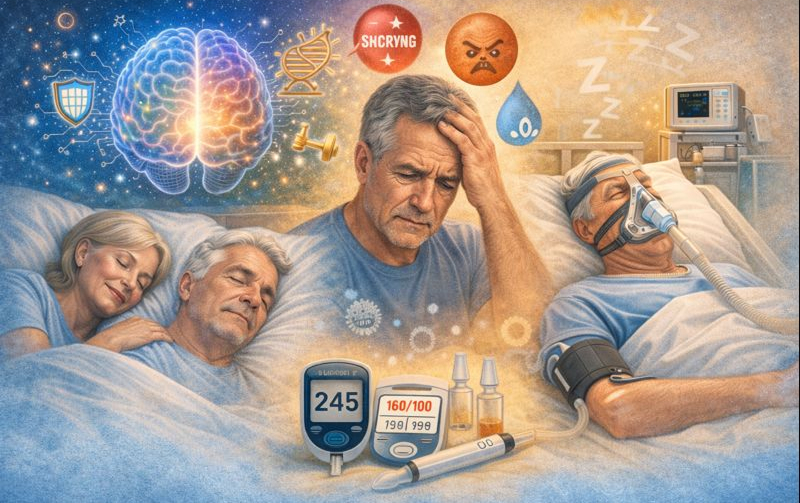
The Healing Power of Deep Sleep & Managing Apnea
Key Takeaways
- Deep sleep is the body's natural healing tool, often compromised by modern screen usage.
- Significant snoring and hypoxia in adults over 50 can lead to memory issues and anger.
- Uncontrolled Diabetes or Hypertension is often a red flag for poor sleep quality.
Deep sleep is the best healing tool which everyone possesses naturally. However, with the modern lifestyle of night-time usage of mobiles, laptops, and TVs, this natural cycle gets compromised. Over time, this leads to stress, mood swings, gastric disturbances, and lowered immunity.
The Impact on Daily Life
The consequences of poor sleep extend beyond just feeling tired. In adults, we see a reduction in work quality and frequent family conflicts. In school children and college students, lack of deep sleep directly results in a reduction in study focus and retention capacity.
"Your brain is sending distress signals to you if you feel symptoms like significant snoring, memory issues, or anger problems."
Warning Signs and CPAP Therapy
Symptoms like snoring, nasal congestion, night cough, and dry mouth should never be ignored. In people over the age of 50, significant snoring and Hypoxia (low oxygen levels) can lead to severe memory issues and anger problems.
For those initiated on CPAP therapy for Obstructive Sleep Apnea, monitoring is crucial. You need modifications in your treatment if:
- You don't feel significantly better in sleep quality within 2 months.
- You haven't started achieving weight loss.
- Your mood has not improved.
Practical Sleep Hygiene Tips
To improve sleep quality immediately, avoid drinking a lot of water after 6 PM to reduce night urination (except for Heart Failure or CKD patients who must follow specific fluid restrictions). Furthermore, avoid white LED lights in bedrooms; kindly change lights to warm yellow LEDs which do not harm the natural sleep cycle.