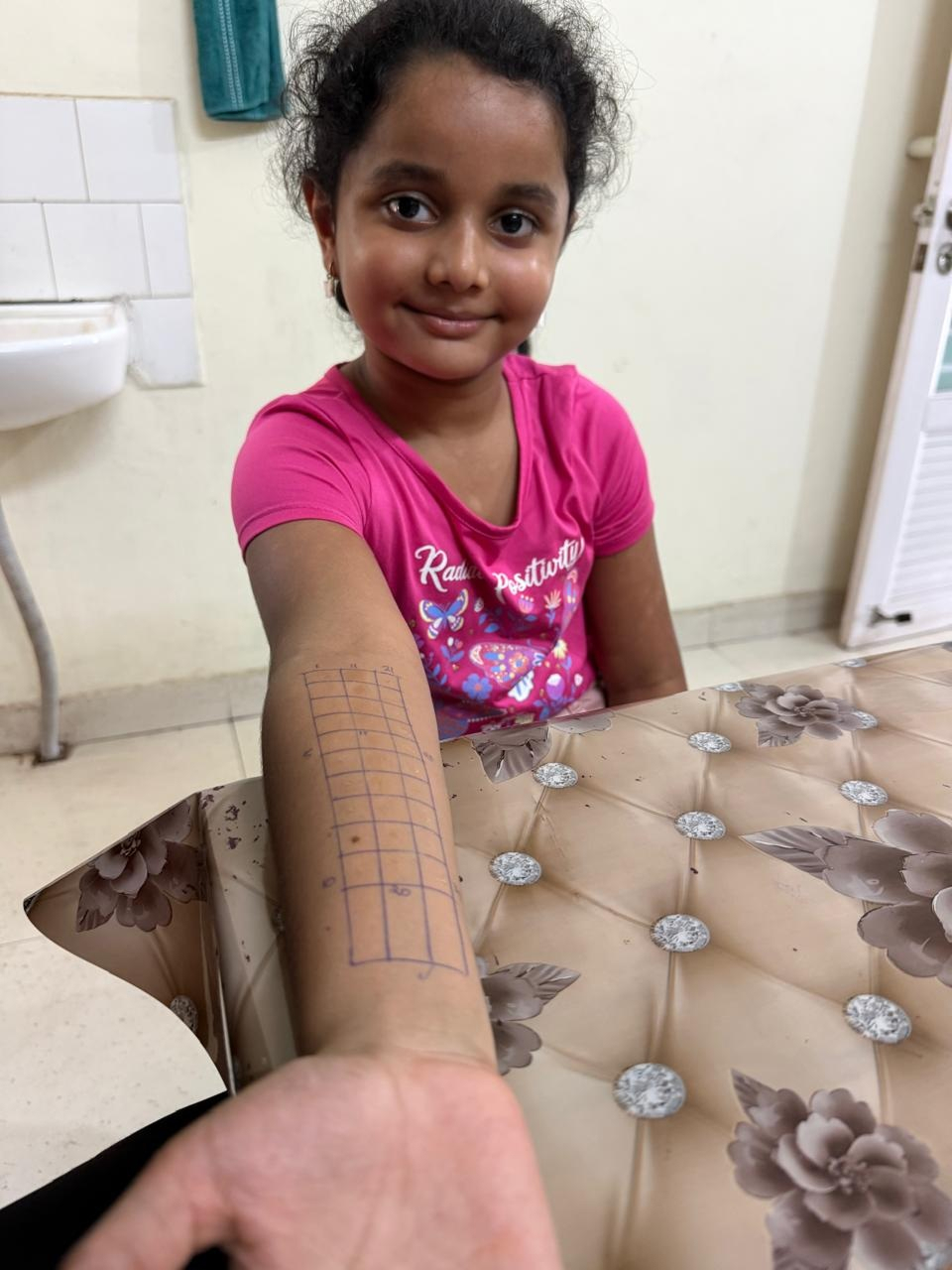
Importance of Allergy Testing in Allergic Asthma & Allergic Rhinits
Importance of Allergy Testing in Allergic Asthma & Allergic Rhinitis
Pathophysiology
If you have an allergy, your immune system overreacts to a substance you inhaled, touched, or ate.
Your immune system controls how your body defends itself. For instance, if you have an allergy to pollen, your immune system identifies pollen as an invader or allergen. Your immune system overreacts by producing antibodies called Immunoglobulin E (IgE). These antibodies travel to cells that release chemicals, causing an allergic reaction.
Why Allergy Testing is Performed
Allergies affect more than 50 million people living in the USA, according to the American College of Allergy, Asthma, and Immunology. Inhaled allergens are by far the most common type. Seasonal allergies and hay fever, which is an allergic response to pollen, affect more than 40 million Americans. The World Allergy Organization estimates that asthma is responsible for 250,000 deaths annually. These deaths can be avoided with proper allergy care, as asthma is considered an allergic disease process.
The burden of allergic diseases in India has been on an uprising trend in terms of prevalence as well as severity. Approximately 20% to 30% of the total population suffers from at least one allergic disease in India. A study carried out over 30 years ago in Delhi reported around 10% allergic rhinitis and 1% asthma in 1964. Thereafter, later studies have reported that 20% to 30% of the population suffer from allergic rhinitis and that 15% develop asthma.
Recently, a multi-centre population study, the Indian Study on Epidemiology of Asthma, Respiratory Symptoms and Chronic Bronchitis (INSEARCH), has also been conducted. The study covered 12 centres comprising of both rural and urban areas spread over different parts of India. The prevalence of bronchial asthma pooled for all the 12 centres was found to be 2.05% (range, 0.4%–4.8%).
Advancing age, smoking, household environmental tobacco smoke (ETS) exposure, asthma in a first-degree relative, and use of unclean cooking fuels have been associated with increased odds of asthma.
Allergy testing can determine which particular pollens, molds, or other substances you’re allergic to. You may need medication to treat your allergies. Alternatively, you can try to avoid your allergy triggers.
Types of Allergens
Allergens are substances that can cause an allergic reaction. There are three primary types of allergens:
- Inhaled allergens affect the body when they come in contact with the lungs or membranes of the nostrils or throat. Pollen is the most common inhaled allergen.
- Ingested allergens are present in certain foods, such as peanuts, soy, and seafood.
- Contact allergens must come in contact with your skin to produce a reaction. An example of a reaction from a contact allergen is the rash and itching caused by poison ivy.
Symptoms Prompting Allergy Testing
Symptoms which usually prompt an allergist to perform allergy testing include:
- Respiratory: itchy eyes, nose or throat; nasal congestion, runny nose, watery eyes, chest congestion, cough or wheezing
- Skin: itchiness or eczema
- Abdominal: vomiting or cramping and diarrhea consistently after eating certain foods
- Severe reactions to stinging insect stings (other than swelling at the site of the sting)
- Anaphylaxis: a serious allergic reaction that affects many parts of the body at the same time
Types of Allergy Testing
- Skin prick testing
- Blood tests for allergen specific IgE (formerly known as RAST - RadioAllergoSorbent Test)
- Total IgE testing
- Eosinophil counts
- Patch testing
- Oral allergen challenge testing
Skin Prick Testing
Skin prick testing is the most convenient method of allergy testing. As results are available within 20 minutes, this allows you to discuss the results with your doctor at the time of testing. Skin prick testing has been shown in clinical studies to improve the accuracy of diagnosis.
It is most commonly performed on the forearm or the back. The skin is first cleaned with alcohol and may be marked with numbers corresponding to the allergens. Using a sterile lancet, a small prick is made into the skin through a drop of allergen extract. This allows a small amount of allergen to enter the skin.
If you are allergic to the tested allergen, a small itchy lump (wheal) surrounded by a red flare will appear within 15-20 minutes. Skin prick tests are slightly uncomfortable (itchy) but are usually well-tolerated, even by small children. Local itching and swelling normally subside within 1-2 hours.
Important Note: Skin prick testing should only be performed by a health professional who has been trained in the procedure and who knows how to interpret the results. A doctor should be present to select the allergens, interpret the results, and deal with any generalized allergic reaction that might very rarely occur. Antihistamine tablets, syrups, or medications with antihistamine-like actions (such as some cold remedies and antidepressants) should not be taken for 3-7 days before testing as these will interfere with the results.
Treatment & Management
Once the allergic factor is isolated, it is best to AVOID the allergens you are sensitive to. Antihistamines & Corticosteroids (depending on the severity of the clinical symptoms) will help control the allergic cascade initiated within you.
If the allergen identified is specifically unavoidable, then immunotherapy is advised.
Subcutaneous Immunotherapy (SCIT)
SCIT has been a proven allergy treatment for more than 100 years. It is given by subcutaneous route and known as allergy shots. The main focus is to decrease the symptoms aggravated by allergens and to restrict the disease from reoccurring in the future by modifying the immunological mechanism. Efficacy and safety are dependent on the dose.
Limitations of SCIT: A major drawback is the use of subcutaneous injections. Studies point to a potential risk of severe systemic reactions, including anaphylaxis. It is also non-patient friendly due to regular injections (which are sometimes locally painful), fear among children and adults, and increased indirect costs due to frequent clinic visits.
Sublingual Immunotherapy (SLIT)
SLIT is a newer form of immunotherapy. Instead of injecting an allergen under the skin, small doses are administered under the tongue. There are two types of SLIT – tablets and drops – but the only forms currently approved by the FDA are tablets for ragweed and grass pollen.
Most clinical trials and surveys published over at least 20 years show that SLIT is relatively safe and effective for the treatment of rhinitis and asthma caused by allergies to dust mites, grass, ragweed, cat dander, and tree pollens.
SLIT formulations are placed under the tongue because they dissolve with saliva and are absorbed directly into blood circulation, maximizing potency compared to swallowing. Custom dosages are administered daily. During the escalation period, the dosage is increased gradually. For tablets, a maintenance dose is given for a four to five-year period. The general prescribed period for SLIT is a minimum of five years.